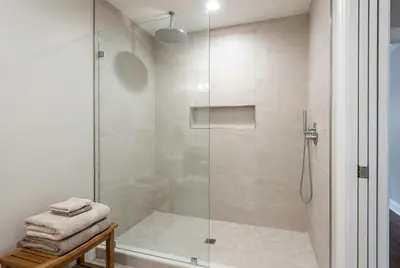
Bathtub To Shower Conversion

Bathtub To Shower Conversion in Flower Hill, New York (NY)

Our Flower Hill crew pulls the idle tub, keeps the alcove, and hands back a shower anywhere in Nassau County within days.

Price my conversion

Written quote at no cost, one callback, no chasing afterwards.

Population
4,795
County
Nassau County
State
New York
Region
Northeast
Median income
$185,341
One alcovethe new shower stands exactly where the tub did
About 3 daysfrom the first cut to the first shower
15 inchesof tub rim you will never climb again
Zero dollarsbefore a written price has your yes on it

Revitalizing your bathroom space with a modern upgrade

Are you tired of climbing over that high wall just to get clean every single morning? Transforming your bulky, outdated porcelain basin into a sleek, walk-in washing zone is the best way to gain more room and make your daily routine way smoother.

Why swapping your tub for a stall makes sense

Getting rid of that massive, unused basin is a total game changer for any homeowner living in Nassau County. Most people find that they never actually soak in the tub anymore, so it just takes up space that could be used for something much more practical. By choosing to remove the heavy fixture, you open up the floor plan and create a sense of openness that makes the room feel much larger.

This transition gives you a much higher level of physical ease when you step inside to rinse off after a long day. You will no longer worry about slipping on a wet edge or struggling with mobility issues while trying to maneuver around a cramped corner. It is honestly the smartest move you can make if you want a washroom that works with your life instead of against it.

Boosting your home value in Flower Hill

Investing in your property in a place where the median household income is around $185,341 means you should probably focus on quality materials that last. When you upgrade your plumbing setup, potential buyers notice the extra care you put into the layout of your house. It shows that you value modern functionality and that you are not afraid to keep your residence updated with the current trends.

Many folks find that a clean, tile-heavy wet room setup is much easier to maintain than scrubbing down corners of an old, chipped basin. You save yourself hours of deep cleaning every month because there are fewer nooks for soap scum to hide in. That extra time you get back is a huge bonus that adds genuine quality to your busy schedule.

Understanding the process of the big change

Once you decide to move forward, a professional will come out to look at your existing plumbing and wall structure. They need to see if your pipes are in the right spot to support a modern drain system before they start swinging any sledgehammers. It is a relief to know that someone is checking the underlying bones of your house to prevent any leaks later on.

Most of these projects involve tearing out the old unit, waterproof backing, and hardware that has likely been there for decades. Then, they install a new pan that is perfectly sloped to keep water moving toward the drain and away from your floor. This kind of precise work ensures that your new space remains dry and free from any unwanted mold or mildew buildup.

Benefits of a walk-in washing zone

FeatureDirect Benefit
Low threshold entrySafer movement for everyone
Glass enclosure panelsMakes the room feel brighter
High quality tile workEasier to wipe down fast
Modern rainfall headBetter rinsing experience daily

Safety is a huge deal, especially when you think about how many slips happen in traditional high-walled basins. Having a flat, non-slip base means you can walk in without worrying about losing your balance or hitting your toes on a hard ledge. It is this kind of simple, functional design that gives you true peace of mind while you wash up.

Another big advantage is the style boost that a custom setup brings to your house. You can pick out beautiful stone or porcelain tiles that match the rest of your decor, making the whole area feel unified. It is a fantastic way to elevate the luxury level of your home without having to move out to a bigger place entirely.

Selecting the right features for your new area

Adding custom shelving inside the wall allows you to keep your soap and shampoo exactly where you need them. No more bulky plastic racks hanging off the head or cluttering up the floor. This clean look helps you organize your essentials while keeping the aesthetic of the room looking sharp and neat.

Perhaps you might want to install a handheld sprayer to make cleaning the walls a breeze. This little addition helps you rinse down every corner of the stall with minimal effort. It is these tiny details that make the difference between a project you like and a project you absolutely love to use.

Dealing with the local neighborhood specifics

Living in a beautiful area with a population of about 4,795 requires a contractor who knows the local vibe. You want someone who understands that you live in a place where quality matters and where details are never overlooked. A good pro will treat your house like it is their own home, making sure every tile is straight and every seam is sealed.

Since you are in a zip code area that values high-end finishes, do not settle for generic kits from the big box stores. You deserve a setup that is built to last and looks like it belongs in a magazine. A professional who offers a free estimate will let you explore all your options without feeling pressured to spend a dime before you are ready.

Taking the first step toward your new space

Making the call to request a free quote is the easiest way to start your home renovation journey. You will get a clear idea of what the cost looks like and how long it will take to finish the job. There is absolutely no reason to wait when you could be enjoying a better, more functional washroom in just a few short weeks.

Remember that you do not have to know every technical detail before you talk to someone about your ideas. They are there to explain the plumbing, the waterproofing, and the design choices in plain English. Just having a conversation about what you want to achieve can spark some great inspiration for the final look of your new area.

Avoiding the common traps of home renovations

Do not try to do this kind of plumbing work on your own unless you are a total pro. One wrong move with the drainpipe can cause major water damage that costs way more to fix than hiring help in the first place. Trusting someone who does this every single day is the best way to protect your investment and ensure everything stays perfectly dry.

Make sure you ask about the timeline and how they handle the construction mess during the project. A good team will lay down protective covering and keep your house as clean as possible while they work. You want to minimize the disruption to your daily life while you wait for your brand-new stall to be ready for use.

Why local knowledge is a huge plus

Working with a local team means they are familiar with the specific building needs in your area. They know how to handle the unique challenges of houses in this part of the state, from the type of pipes used to the floor structure common in your neighborhood. This local experience makes the whole process faster and way more predictable for you.

You get to support a business that cares about its reputation right here in your backyard. When you have questions after the job is done, it is much better to know that your professional is just a short drive away. This kind of relationship is invaluable for any homeowner who wants to build a long-term connection with someone they can trust.

Final thoughts on transforming your home

Upgrading your washroom is one of the most rewarding things you can do to change how you feel about your house. Every time you step into that spacious new area, you will be happy that you decided to make the switch. It is all about creating a space that makes you feel good and works perfectly for your daily routine.

Go ahead and reach out for that free estimate to see what is possible in your own home. There is nothing to lose and a whole lot of convenience to gain by finding out your options today. Your perfect, modern washroom experience is waiting just behind that old, heavy door you keep meaning to replace.

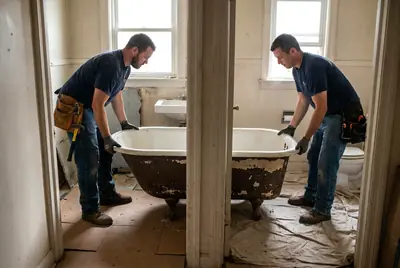
Why the tub goes in Flower Hill

Count the baths your household actually ran last year. In most homes we visit, the honest number is somewhere between zero and three, and yet every single morning somebody swings a leg over fifteen inches of porcelain rim to stand up and shower inside a fixture built for lying down. The tub charges rent daily and works a few evenings a year.

Nothing dramatic follows from that. Nobody is in danger because a bathtub exists, and if long soaks are part of your week, keep the tub and enjoy it with our blessing. The case for the conversion is plainer: when the tub has become a shower tray with high sides, you are paying, in caution and in cleaning, for a feature you retired years ago.

The swap itself is smaller than most people picture. The supply lines, the drain and the alcove walls are already exactly where a shower wants them, which is why this is a job measured in days. We are not building a new bathroom; we are letting the one you have stop pretending it still gives baths.

Three days, wall to wall in Flower Hill

The same alcove, photographed the way the week actually unfolds. Weather never delays this one; it all happens indoors.

Day one

Out with the tub, in with the rough plumbing

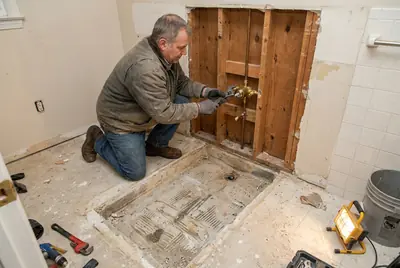
Floors along the hallway get covered, the water goes off for a few hours, and the bathtub is cut free and carried out, tile flange and all. With the alcove stripped, the plumber moves the drain to where the new pan wants it and sets the new valve at shower height. By supper the room is bare, clean and ready.

The old bathtub cut loose and carried out of the alcove
Drain and valve reworked in the open alcove
Day two

The pan goes down, the walls go up

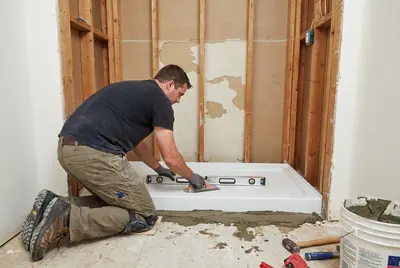
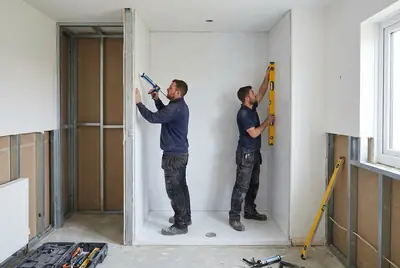
The base arrives first: an acrylic pan set dead level on a mortar bed, or a sloped, waterproofed floor when the plan says curbless. Then the walls close in, either grout-free panels bonded in a single afternoon or backer board ready for tile. Everything from here on is watertight before it is pretty.

A low curb shower pan bedded level in the alcove
Wall panels closing over the waterproofed alcove
Day three

Glass, silicone and the first shower

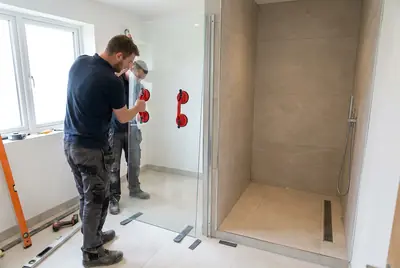
The glass panel or door is drilled, hung and plumbed straight, the trim goes on, and the silicone lines are drawn last. Silicone wants a day to cure, so the first shower usually happens the following morning, which is exactly how we schedule the walkthrough.

The fixed glass panel being set beside the opening
The finished shower standing where the bathtub was

Low curb or no curb in Flower Hill

Both are real showers in the same alcove. The difference is the entry, and what has to happen under it.

What you weighLow curbCurbless
What stands at the entryA tidy threshold about 3 to 4 inches tallNothing. The bathroom floor rolls straight into the shower
Cost, installedThe friendlier bracket, most jobs land hereRoughly a third to a half more, the floor is rebuilt
What the crew rebuildsThe alcove only; the bathroom floor stays shutPart of the bathroom floor, sloped and waterproofed
Water containmentThe curb and glass do the holdingThe slope and a linear drain do the holding
Suits bestStraight swaps on a budget and upstairs bathroomsWheels, walkers, and anyone planning to stay put for decades

Undecided is a fine answer on the form. The site visit settles it with a tape measure, not a sales pitch.

What we do while the bathroom is ours in Flower Hill

The tub leaves whole or in pieces

Removal

The tub leaves whole or in pieces

Cut free, hauled out and off to recycling, with floors and doorways shielded on the way. The loudest hour of the conversion, and it wraps before most jobs have begun.

Drain, trap and valve reset

Plumbing

Drain, trap and valve reset

Tub drains sit at one end; showers drain where the pan says. We move what needs moving and swap the old valve for a pressure-balanced one.

Pan or sloped floor

The base

Pan or sloped floor

A level acrylic pan for most swaps, a mortar-built sloped floor for curbless plans. Either way it is tested with water before anything covers it.

Panels or tile, sealed tight

The walls

Panels or tile, sealed tight

Grout-free panels go up in an afternoon and wipe clean forever. Tile takes longer, costs more, and looks like whatever you can imagine.

Panel or door, hung plumb

The glass

Panel or door, hung plumb

A fixed panel keeps things open and easy to clean; a hinged door closes the warmth in. Both are tempered, both are set dead straight.

Trim, silicone and handover

The finish

Trim, silicone and handover

Shelving, the hand shower, clean caulk lines and a walkthrough. We leave the cure time in writing so the first shower is not a gamble.

What the swap costs in Flower Hill

The jobUsual rangeInside the number
Standard tub-to-shower conversion$3,100 - $5,600Tub out, low curb pan, wall panels, new valve, glass panel.
Curbless conversion$4,900 - $8,800The floor is rebuilt flush and sloped to a linear drain.
Glass: fixed panel or hinged door$450 - $1,400A single panel sits at the low end, a framed door at the top.
Walls: PVC panels or tile$1,100 - $3,900Panels finish in a day; tile adds days and takes any look you want.
Tear-out only$450 - $950The tub gone and the alcove left clean for another trade.
Small job minimumaround $2,400Even the simplest swap books a licensed plumber and a full crew.

Wall condition, drain position and the glass you choose move every line. The visit pins the figure down, and the figure then holds.

What your plumber will find

A bathtub drains at one end through its own trap; most showers want the drain nearer the middle, or along one edge when the plan is curbless. Sometimes the existing trap is close enough to reuse and sometimes it has to travel a foot or two, which means opening a strip of floor. We can usually tell which from the basement or the crawl space during the visit, and the paperwork you sign already names which one you are getting.

Houses older than the seventies like to add a surprise: galvanized supply lines rusted nearly shut, a cast iron trap that crumbles at a touch, or framing that got damp decades ago and kept it quiet. None of it is rare and none of it is ruinous, but it is your call, not ours. When something like that turns up, work pauses, you get photographs and a price for the fix, and nothing is billed until you have said yes to it. A conversion should never be the job where the invoice writes itself.

Asked before the demo bar comes out

QIs losing the only bathtub a resale mistake?

AAgents around Flower Hill repeat one rule: a family house shows better with a tub somewhere in it. If this is your only tub and small children are in your plans, we put that on the table during the visit and you decide with open eyes. If another bathroom keeps its tub, or the buyers you expect are shower people, the argument evaporates.

QHow long do we go without washing?

AThe toilet and sink stay usable every evening, and the water is only off for stretches on day one. The shower itself is ready once the silicone cures, so figure on missing roughly three days of showers at home. Plenty of clients time the job before a weekend away.

QDoes all the old tile come off the walls?

AOn the alcove walls, yes, because the new waterproofing needs to start from the studs, not from forty-year-old grout. Tile outside the alcove stays put, and we cut a clean line where the two meet.

QCan the new shower use the tub drain?

AThe pipe itself is nearly always reusable; the position is the question. A low curb pan can often sit its drain within reach of the old trap. Curbless floors want a relocated or linear drain, and that difference is priced before demo, never discovered after.

QDo we need a permit for the swap?

AA like-for-like fixture swap usually rides on a simple plumbing permit, and moving the drain can add an inspection. We file whatever your jurisdiction wants and fold the cost into the written price.

QWhat if there is rot behind the tub?

AIt happens, mostly around the old tile flange. You get photographs the hour we find it, a firm price for the repair, and the choice to proceed or pause. The framing fix is usually a morning, not a remodel.

Streets and showers near Flower Hill

The map carries the geography; the link lists underneath spell out every town our crews can reach from this one.

Flower Hill in short

StandingIncorporated place
Population4,795
Land area1.6 sq mi
Density2,975 per sq mi
Median income$185,341

For the bigger map: county seat pages start at Nassau County; the statewide picture lives on New York; the wider region is the Northeast; background reading sits on Wikipedia.

Bathrooms we convert around Flower Hill

Conversions booked across New York

One three-day job stands between this bathroom and its best fixture.

Get my free quote