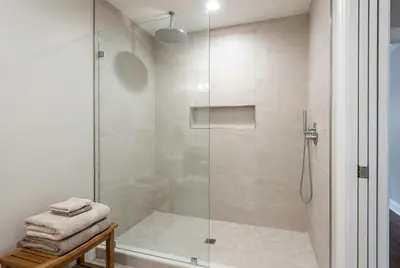
Bathtub To Shower Conversion

Bathtub To Shower Conversion in Bluff (Pittsburgh), Pittsburgh, Pennsylvania (PA)

One alcove in Bluff (Pittsburgh) is about to earn its keep again. The Pittsburgh crew handles demo, plumbing, walls and glass.

Price my conversion

Written quote at no cost, one callback, no chasing afterwards.

One alcovethe new shower stands exactly where the tub did
About 3 daysfrom the first cut to the first shower
15 inchesof tub rim you will never climb again
Zero dollarsbefore a written price has your yes on it

Ditching the high walls for easy access

Thinking about swapping that giant, clunky porcelain basin for a sleek walk-in space? You probably hate climbing over those slippery edges every morning just to get clean.

Making this change lets you reclaim your bathroom floor space while adding a touch of modern convenience that makes daily life much smoother. Upgrading your hygiene habits in the Bluff section of Pittsburgh, Pennsylvania, is a smart move for anyone tired of the outdated tub lifestyle.

Why you should ditch the old basin

Most people deal with stubborn stains and peeling caulking around their bathing areas for far too long. These aging fixtures often trap grime, which makes scrubbing a total nightmare on your weekends. By switching to a curb-less or low-profile entry system, you get a cleaner environment that requires way less elbow grease to maintain.

Furthermore, these new setups offer incredible accessibility benefits for folks of all ages. You won't have to worry about tripping over a high edge ever again. This upgrade adds a level of sheer ease to your routine that you will honestly wonder why you waited so long to achieve.

Understanding the construction process

Typically, your bathroom renovation starts with removing that heavy, rusted metal or cast iron beast that sits there taking up half the room. Skilled hands pull out the old plumbing fixtures, inspect the floor joists for any hidden water damage, and prepare the subfloor for a waterproof membrane. Dealing with this part of the job correctly ensures you never have to worry about leaks damaging your home structure later on.

Once the demolition finishes, you get to choose your new tile, glass doors, and rainfall heads to match your style. This stage allows you to customize the layout to fit your exact preferences, ensuring the final result feels like a custom spa retreat. You gain full control over every single detail during this phase.

Getting the details right

Focusing on the waterproofing process is where the real quality happens during your remodel. Professionals use heavy-duty liners and specialized drainage systems to keep your house protected from moisture buildup. You end up with a solid, leak-free space that holds up against years of heavy use without failing.

Thinking about the flow of the room is just as important as the mechanics. A well-placed glass panel prevents water from splashing onto your vanity or toilet area. This smart design keeps the rest of the bathroom dry, which stops mold from growing in hidden corners of the room.

The local impact on your property

Living in a place like the Bluff, where space can be tight, means every square inch in your house counts for a lot. Upgrading your bathing area makes the whole room look bigger and brighter, which is a massive plus when you eventually decide to sell your place. Buyers definitely notice when a bathroom looks updated and fresh compared to those with crusty old tubs.

Investing in this transformation is really about increasing the long-term value of your home. You spend money now, but you get a return on that investment through daily joy and a higher asking price later. Plus, nobody wants to buy a house that feels stuck in the last century.

Financial benefits to consider

While the initial cost matters, think about the long-term savings on maintenance and cleaning supplies. You stop spending money on heavy chemicals to bleach stubborn stains out of old porcelain surfaces. This switch simplifies your life by removing the daily chores that drain your energy and time.

Actually, many homeowners find that they save money by choosing a pre-fabricated system versus custom stone work. You still get a beautiful, durable result that looks expensive, but you don't have to break the bank to get it. It is all about choosing the right balance between style and budget.

What to expect from your free estimate

Getting a clear price tag helps you plan your home improvements without feeling stressed out by hidden costs. When a pro comes by to look at your setup, they check the plumbing, measure the footprint, and discuss the materials that suit your needs. You get a firm number to work with, which removes all the guesswork from the process.

This initial meeting is the perfect time to ask every single question you have about the timeline. Knowing exactly when the work starts and finishes helps you organize your schedule so you don't get caught without a place to wash up. You deserve clear communication before anyone touches your walls.

FeaturePrimary Benefit
Curb-less entryRemoves tripping hazards for safety
Glass enclosuresCreates an open and airy visual feel
Waterproof linersPrevents long-term structural water damage
Modern fixturesReduces water waste and monthly bills

Making the choice for a better home

Transitioning away from a bulky tub is truly a lifestyle upgrade that improves your mood every single day. You stop dreading the morning rush and start enjoying a quick, refreshing soak or rinse. There is something really satisfying about stepping into a space that was built specifically for your own comfort and style preferences.

Don't let the fear of construction keep you trapped with a dated bathroom design. The process goes much faster than you think, especially when you hire people who know exactly how to handle pipes and tiles. You can have a brand-new space ready for use before you even realize it.

Tips for choosing your materials

Select slip-resistant tiles for the floor to keep your footing solid while you wash. Many people choose large-format porcelain slabs because they have fewer grout lines to scrub clean. You get a seamless look that makes the whole area appear much larger than it actually is.

Consider adding a bench or a built-in niche for your soaps and shampoos. These little additions make a huge difference in how organized your space stays over time. You stop cluttering your floor with bottles and start enjoying a clean, minimalist environment.

Why the neighborhood matters

In an area near the downtown sector, homes often have unique layouts that require custom solutions. You might find that your plumbing runs in a way that requires a bit of clever thinking during the conversion process. Working with a contractor who understands these older buildings is how you ensure everything stays up to code.

You deserve a contractor who respects your house and treats it like their own. They should clean up the dust, protect your flooring, and keep the noise down while they work. Knowing that your home is in good hands allows you to relax while the magic happens.

Actionable steps for your project

First, clear everything out of your bathroom vanity and medicine cabinet so the crew has plenty of room to move around. Second, decide if you want to keep your existing plumbing placement or move the hardware to a new wall. Finally, request your estimate today to lock in your project and get the ball rolling on your renovation.

This is your chance to turn a neglected part of your home into a sanctuary that you actually enjoy using. You don't have to settle for the standard builder-grade fixtures that came with the house. Your vision for a better home is just one simple conversation away from reality.

Final thoughts on your renovation journey

Taking that final step to ditch the tub is a liberating experience for any homeowner. You gain space, safety, and a whole lot of style that improves your daily existence immediately. Reach out for your free quote and start imagining how much better your morning routine will feel once the work is finished.

You are the one who has to live with the results, so make sure you pick high-quality components that last a long time. Everything comes down to your personal taste and how you want to feel when you step into that shower. Go ahead and start the process of transforming your home today.

Why the tub goes in Bluff (Pittsburgh)

Count the baths your household actually ran last year. In most homes we visit, the honest number is somewhere between zero and three, and yet every single morning somebody swings a leg over fifteen inches of porcelain rim to stand up and shower inside a fixture built for lying down. The tub charges rent daily and works a few evenings a year.

Nothing dramatic follows from that. Nobody is in danger because a bathtub exists, and if long soaks are part of your week, keep the tub and enjoy it with our blessing. The case for the conversion is plainer: when the tub has become a shower tray with high sides, you are paying, in caution and in cleaning, for a feature you retired years ago.

The swap itself is smaller than most people picture. The supply lines, the drain and the alcove walls are already exactly where a shower wants them, which is why this is a job measured in days. We are not building a new bathroom; we are letting the one you have stop pretending it still gives baths.

Three days, wall to wall in Bluff (Pittsburgh)

The same alcove, photographed the way the week actually unfolds. Weather never delays this one; it all happens indoors.

Day one

Out with the tub, in with the rough plumbing

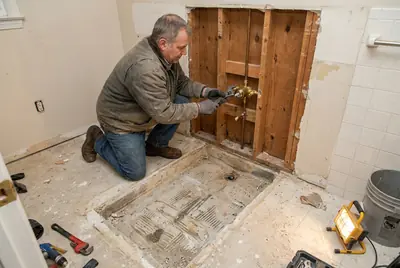
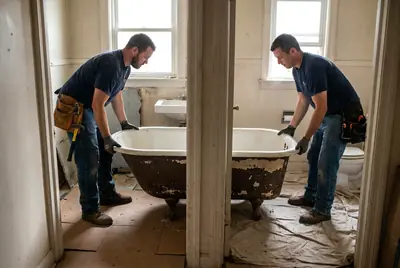
Floors along the hallway get covered, the water goes off for a few hours, and the bathtub is cut free and carried out, tile flange and all. With the alcove stripped, the plumber moves the drain to where the new pan wants it and sets the new valve at shower height. By supper the room is bare, clean and ready.

The old bathtub cut loose and carried out of the alcove
Drain and valve reworked in the open alcove
Day two

The pan goes down, the walls go up

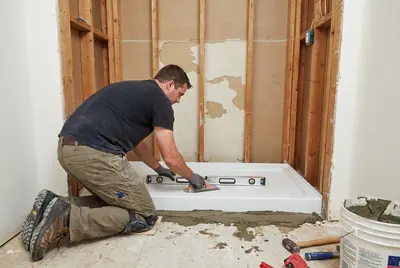
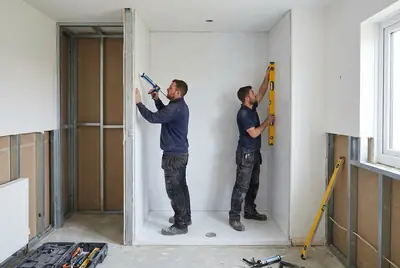
The base arrives first: an acrylic pan set dead level on a mortar bed, or a sloped, waterproofed floor when the plan says curbless. Then the walls close in, either grout-free panels bonded in a single afternoon or backer board ready for tile. Everything from here on is watertight before it is pretty.

A low curb shower pan bedded level in the alcove
Wall panels closing over the waterproofed alcove
Day three

Glass, silicone and the first shower

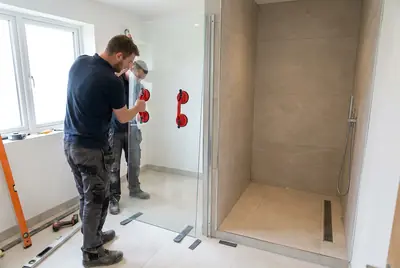
The glass panel or door is drilled, hung and plumbed straight, the trim goes on, and the silicone lines are drawn last. Silicone wants a day to cure, so the first shower usually happens the following morning, which is exactly how we schedule the walkthrough.

The fixed glass panel being set beside the opening
The finished shower standing where the bathtub was

Low curb or no curb in Bluff (Pittsburgh)

Both are real showers in the same alcove. The difference is the entry, and what has to happen under it.

What you weighLow curbCurbless
What stands at the entryA tidy threshold about 3 to 4 inches tallNothing. The bathroom floor rolls straight into the shower
Cost, installedThe friendlier bracket, most jobs land hereRoughly a third to a half more, the floor is rebuilt
What the crew rebuildsThe alcove only; the bathroom floor stays shutPart of the bathroom floor, sloped and waterproofed
Water containmentThe curb and glass do the holdingThe slope and a linear drain do the holding
Suits bestStraight swaps on a budget and upstairs bathroomsWheels, walkers, and anyone planning to stay put for decades

Undecided is a fine answer on the form. The site visit settles it with a tape measure, not a sales pitch.

What we do while the bathroom is ours in Bluff (Pittsburgh)

The tub leaves whole or in pieces

Removal

The tub leaves whole or in pieces

Cut free, hauled out and off to recycling, with floors and doorways shielded on the way. The loudest hour of the conversion, and it wraps before most jobs have begun.

Drain, trap and valve reset

Plumbing

Drain, trap and valve reset

Tub drains sit at one end; showers drain where the pan says. We move what needs moving and swap the old valve for a pressure-balanced one.

Pan or sloped floor

The base

Pan or sloped floor

A level acrylic pan for most swaps, a mortar-built sloped floor for curbless plans. Either way it is tested with water before anything covers it.

Panels or tile, sealed tight

The walls

Panels or tile, sealed tight

Grout-free panels go up in an afternoon and wipe clean forever. Tile takes longer, costs more, and looks like whatever you can imagine.

Panel or door, hung plumb

The glass

Panel or door, hung plumb

A fixed panel keeps things open and easy to clean; a hinged door closes the warmth in. Both are tempered, both are set dead straight.

Trim, silicone and handover

The finish

Trim, silicone and handover

Shelving, the hand shower, clean caulk lines and a walkthrough. We leave the cure time in writing so the first shower is not a gamble.

What the swap costs in Bluff (Pittsburgh)

The jobUsual rangeInside the number
Standard tub-to-shower conversion$3,100 - $5,600Tub out, low curb pan, wall panels, new valve, glass panel.
Curbless conversion$4,900 - $8,800The floor is rebuilt flush and sloped to a linear drain.
Glass: fixed panel or hinged door$450 - $1,400A single panel sits at the low end, a framed door at the top.
Walls: PVC panels or tile$1,100 - $3,900Panels finish in a day; tile adds days and takes any look you want.
Tear-out only$450 - $950The tub gone and the alcove left clean for another trade.
Small job minimumaround $2,400Even the simplest swap books a licensed plumber and a full crew.

Wall condition, drain position and the glass you choose move every line. The visit pins the figure down, and the figure then holds.

What your plumber will find

A bathtub drains at one end through its own trap; most showers want the drain nearer the middle, or along one edge when the plan is curbless. Sometimes the existing trap is close enough to reuse and sometimes it has to travel a foot or two, which means opening a strip of floor. We can usually tell which from the basement or the crawl space during the visit, and the paperwork you sign already names which one you are getting.

Houses older than the seventies like to add a surprise: galvanized supply lines rusted nearly shut, a cast iron trap that crumbles at a touch, or framing that got damp decades ago and kept it quiet. None of it is rare and none of it is ruinous, but it is your call, not ours. When something like that turns up, work pauses, you get photographs and a price for the fix, and nothing is billed until you have said yes to it. A conversion should never be the job where the invoice writes itself.

Asked before the demo bar comes out

QIs losing the only bathtub a resale mistake?

AAgents around Bluff (Pittsburgh) repeat one rule: a family house shows better with a tub somewhere in it. If this is your only tub and small children are in your plans, we put that on the table during the visit and you decide with open eyes. If another bathroom keeps its tub, or the buyers you expect are shower people, the argument evaporates.

QHow long do we go without washing?

AThe toilet and sink stay usable every evening, and the water is only off for stretches on day one. The shower itself is ready once the silicone cures, so figure on missing roughly three days of showers at home. Plenty of clients time the job before a weekend away.

QDoes all the old tile come off the walls?

AOn the alcove walls, yes, because the new waterproofing needs to start from the studs, not from forty-year-old grout. Tile outside the alcove stays put, and we cut a clean line where the two meet.

QCan the new shower use the tub drain?

AThe pipe itself is nearly always reusable; the position is the question. A low curb pan can often sit its drain within reach of the old trap. Curbless floors want a relocated or linear drain, and that difference is priced before demo, never discovered after.

QDo we need a permit for the swap?

AA like-for-like fixture swap usually rides on a simple plumbing permit, and moving the drain can add an inspection. We file whatever your jurisdiction wants and fold the cost into the written price.

QWhat if there is rot behind the tub?

AIt happens, mostly around the old tile flange. You get photographs the hour we find it, a firm price for the repair, and the choice to proceed or pause. The framing fix is usually a morning, not a remodel.

Streets and showers near Bluff (Pittsburgh)

The map carries the geography; the link lists underneath spell out every town our crews can reach from this one.

Tubs coming out all over Pittsburgh

Demo day within reach of Bluff (Pittsburgh)

One three-day job stands between this bathroom and its best fixture.

Get my free quote